

Is Nobody Talking to Each Other Anymore?
What happens when AI writes for you and AI reads for the other side

Key Points:
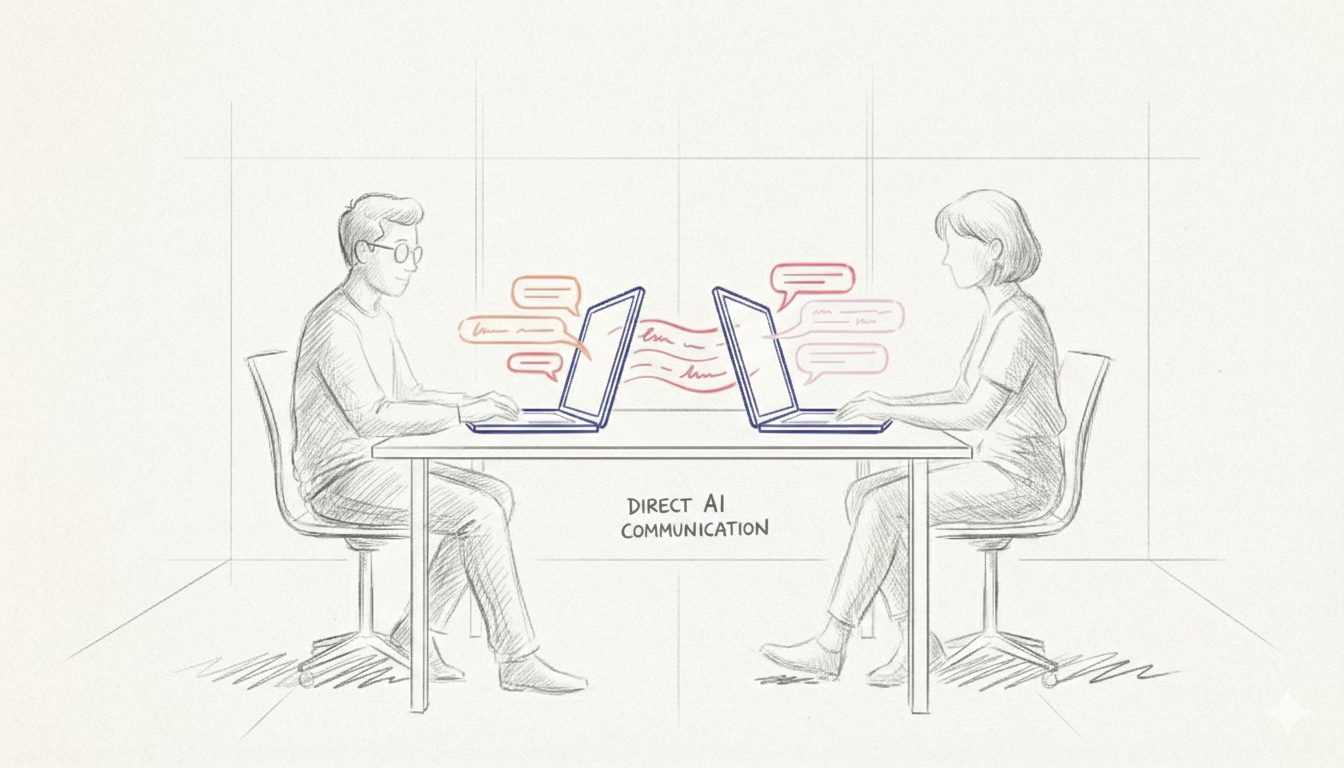
When AI writes your communication and AI summarizes it on the other end, no human-to-human exchange actually happens. We are performing a theater of communication.
Communication carries signals beyond information: effort, presence, care, identity. AI transfers information but breaks these signals. That is why AI-polished messages feel hollow even when they read well.
Not all communication needs you in it. Separating what is informational (let AI handle it openly) from what is relational (needs your presence) protects trust and relationships.
The Communication Theater We All Perform
You have a client presentation due Monday. It is Friday. You have been pushing it all week, handling the urgent, and now it stares at you from your task list. You almost know what should be inside, but you are not fully there. You don’t feel like sitting with that uncomfortable, itchy feeling of getting your thoughts together, figuring out what to say, wrestling with your inner doubt about whether your thinking is right.
So you take a shortcut. You prompt the presentation into existence. Maybe you edit a slide or two. You send it before end of day, claiming it carries your analysis and recommendations.
Your client receives it Friday evening but leaves it for Monday. Monday morning hits with back-to-back meetings, planning, aligning. So they ask AI to summarize your presentation. They skim the bullet points. Close enough.
You both just performed a communication theater. You claimed you wrote what you didn’t write. They claimed they read what they didn’t read. AI talked to AI. No human-to-human exchange took place.
You might think this is an edge case. It isn’t.
This is everywhere
You scroll LinkedIn and three posts in a row read like they were written by the same person. They weren’t, but they might as well have been. A colleague’s email arrives with that unmistakable polish, too smooth to be them. A client report lands on your desk, fifty pages of impressive nothing. Like a Potemkin village of expertise: looks like a city of knowledge, but nobody on the team actually internalized the data or did the thinking.
Over half of long-form LinkedIn posts now show signs of AI generation. Engagement dropped 40% last year. People are walking away from content that doesn’t feel human. Research backs up what you already sense: people perceived as using AI are evaluated as less cooperative and less trustworthy.
The quality of language went up. Grammar is better. Structure is cleaner. And yet something feels off when you are on the receiving end. It doesn’t have to be obvious AI slop. Even polished, human-edited AI text carries a certain absence. You can feel it, but can’t always name it. Something is missing.
What communication actually carries
Writing to someone was never just about transferring information.
When you write something yourself, you carry signals that go beyond the words. Your effort signals care: I spent time on this, on you. Your imperfection signals authenticity: this is really me. Your attention signals respect: I was present with your message. Your perspective signals identity: this is how I see it, not how a language model averages it. Your willingness to put rough thinking out there signals trust: I am putting myself out there.
Think of receiving a beautiful greeting card. You open it. Inside: nothing. No signature, no messy ink, no personal message. The card is perfect. But it carries zero proof that anyone was actually there.
AI can transfer information. But it cannot authentically carry effort, presence, vulnerability, or identity. You can’t signal effort when there was no effort. You can’t signal presence when you were absent from the process.
Does it matter to you that I spent the last two weeks working on this issue? Why?
We are all doing this to each other
You hate receiving AI-generated communication. You feel dismissed by it, bored by it, sometimes insulted by it. When you sense no human is behind it, something in you disengages. Even synthetic comments, whose entire purpose is to start a human conversation, feel pointless. If the comment is generated, what is the conversation for? To feed an algorithm?
But it doesn’t stop you from prompting a post when you are tired. Or letting AI draft that email because you don’t have time. Or polishing a report with AI because the deadline is here and your thinking isn’t.
Two-thirds of professionals use AI for communication. Less than half trust it. We know this isn’t working, and we keep doing it. The ease and convenience of AI lures us into doing to others exactly what we resent receiving. We are victims and perpetrators of the same theater.
We use AI to appear more competent, more articulate, more knowledgeable than we actually are.
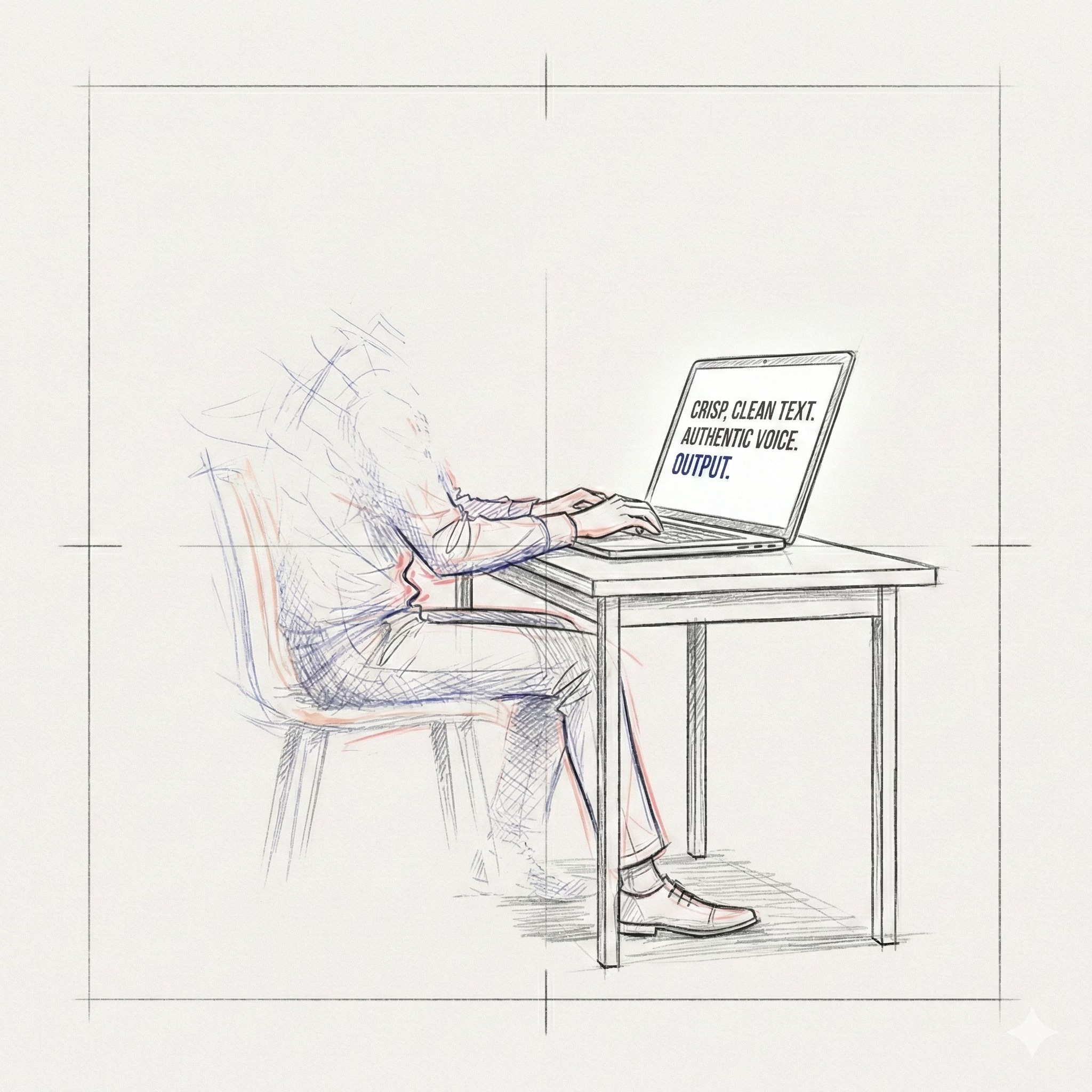
The irony is that the more polished we get, the less of us is left. We disappear.
The signals that make communication human, that make it ours, get stripped away one AI-polished message at a time.
Where this goes
If you don’t like receiving AI-mediated communication, others don’t like receiving yours either. Multiply that across every email, every report, every message in your organization. What happens to trust when the signals we relied on for centuries are getting faked, but not well enough for people not to notice?
And so the arms race begins. AI generates communication that feels off. So we use better AI to make it feel more authentic. We prompt it to include typos, to mimic our speaking patterns, to sound more human. Recipients get better at detecting it. So we use even better AI. We are now competing to fake authenticity. And nobody wins because the finish line keeps moving.
The way through
Not all communication needs you in it. Some communication is informational: data, status updates, summaries, logistics. Let AI handle that, openly. No pretense. No theater.
But some communication is relational. It builds trust, carries your thinking, signals who you are, and that you care. That needs you. Even if your version is shorter, rougher, and less polished. Especially then. Because shorter, rougher, but real beats long, polished, but hollow.
For some people, AI makes communication possible where it wasn’t before. Non-native speakers, people with disabilities. That is different from making communication convenient, where effort was the point.
Remember the Friday presentation? What if instead of prompting the whole thing and pretending it was yours, you sent two things: a one-pager with AI-compiled data and context, clearly labeled as such. And a half-page with your actual thinking, your interpretation, your recommendation. The first page is for their AI to process. The second page is for them.
No theater. No pretense. And your client gets something actually useful: your judgment, not a language model’s average.
What this means for your team
Now imagine this dynamic playing out across your entire organization. Every team, every meeting follow-up, every project update. What kind of culture are you building when nobody is actually talking to each other?
I will explore the organizational side of this in a future issue. For now, the question is personal: what are you going to do about your own communication?
Try This
Before you hit send on your next message, ask yourself one question: Does this need me, or just information exchange?
If it just needs information, let AI handle it. Be transparent about it.
If it needs you, write it yourself. Even if it is imperfect. Especially if it is imperfect.
If you read last issue, you will recognize this as the same calibration instinct applied to communication specifically.

The goal is not to stop using AI for communication. The goal is to stop pretending AI-to-AI is human-to-human.
A Final Thought
I catch myself doing the same thing I described above. Prompting a post because I am tired. Letting AI smooth out an email because I don’t feel like struggling with the words. Then feeling that familiar hollowness when I hit send, knowing the recipient will get my information but not me.
We invest so much energy in crafting perfect images of ourselves, yet when it comes to choosing who to trust and work with, we value authenticity above all. We can sense when someone is real, even if their reality is messy or imperfect.
AI supercharges the pattern that corporate culture has been building for decades: appear more knowledgeable, more competent, more thoughtful than you truly are. But now the gap between who we are and who we pretend to be grows faster than ever.
I don’t have a clean solution. But I know every time I choose to write something myself, even when it is harder, even when it is rougher, I stay in the exchange. I stay present. And that is worth protecting.
– Paweł
P.S. If this resonated, I am exploring how AI-mediated communication affects teams and organizational culture in a future issue.
Sources & Further Reading:
Scientific Reports (2023). Artificial intelligence in communication impacts language and social relationships. Study showing people perceived as using AI responses are evaluated as less cooperative, less trustworthy, and more dominant.
Originality.AI / Fast Company (2024). How LinkedIn opened the door to AI slop. 54% of long-form LinkedIn posts showed signs of AI generation; engagement with AI-generated content dropped 40%.
KPMG (2025). Trust, attitudes and use of AI: A global study. Global study finding 66% of people use AI but only 46% trust it.